
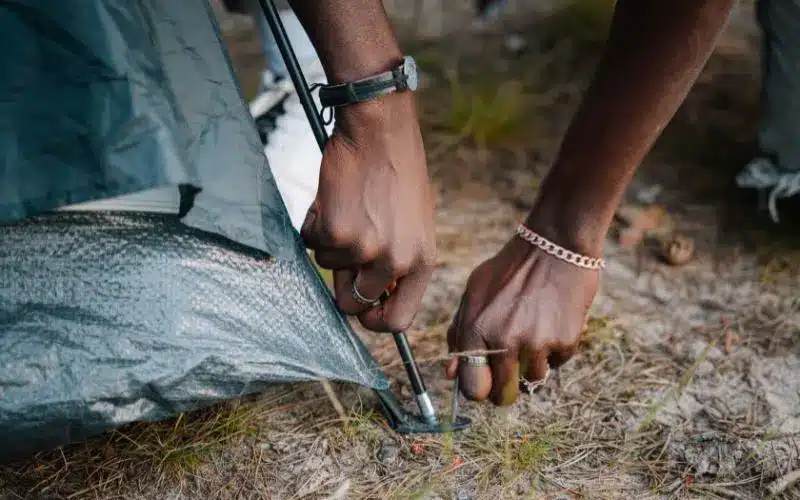
So you just drove three hours to your camping spot. Excited about setting up that new inflatable tent, right? But then a few hours later you’re dealing with sagging beams, mysterious air loss, or a punctured floor because—oops—you skipped ground prep. Been there?
You’re not alone. Air beam tents changed camping with fast setup and solid stability. But tons of people mess this up. New campers and old-timers alike wreck their gear through avoidable mistakes. Good news is most tent failures can be prevented.
This guide covers the five biggest mistakes with inflatable tents and how to avoid them. You’ll save money, time, and major headaches whether this is your first air-beam shelter or you’ve used them for years.
Traditional tents use aluminum or fiberglass poles threaded through sleeves. Your inflatable tent? Uses pressurized air tubes instead.
This changes how you pitch, maintain, and store everything. Air beams flex with wind differently than poles. They respond to temperature. Need specific pressure levels too. The habits from your old pole tent can wreck this new investment.
Manufacturer guidelines aren’t suggestions—they’re requirements. Each brand has PSI specs, inflation procedures, valve systems designed through testing. Following them matters for safety and making your tent last.
Every weekend at campgrounds someone pumps their tent to max pressure thinking more equals better. Nope. You just set yourself up for failure.
Too much PSI stresses air beams and seams beyond design limits. Fabric gets drum-tight. Everything experiences forces it wasn’t built for. You might not see damage immediately but you’re basically setting a time bomb. Over-inflated beams are especially bad in hot weather when air expands naturally.
What happens when you exceed recommended pressure? Beam rupture is dramatic—loud pop, tent collapses. More common is long-term damage from repeated over-pressurization. Seams separate thread by thread. Waterproof coating peels. Air tubes develop weak spots that fail during storms.
Warning signs you’re over-inflated:
Under-inflated tents create different problems. Without proper pressure your tent loses structure. Fabric sags. Interior space shrinks. Rain pools instead of shedding. Wind resistance drops.
Think about it—would you drive on a half-flat tire? Same principle here. Low pressure stresses guy-lines and stakes because the structure can’t support itself. During storms under-inflated beams bend too much, weakening tube material over time.
Performance suffers immediately. Rain penetrates through saggy fabric. Wind creates flapping that stresses seams and keeps you awake. Your nice camping spot becomes uncomfortable fast.
How do you get it right then? Read your manufacturer specs. Most quality air beam tents need 7-10 PSI but this varies by model and tube size.
Pressure gauges aren’t optional. Don’t guess. Don’t use the “squeeze test” some guy at the campground taught you. Get a reliable gauge that reads your pressure range. Digital ones are precise. Analog ones work without batteries.
Step-by-step inflation:
Temperature and altitude matter. A tent inflated at cool morning temps gains pressure as the day warms. Every 10°F increase adds roughly 0.5 PSI. At high elevation you need less pressure initially. Check throughout the day during your first trips until you get a feel for it.
Your inflatable tent’s biggest enemy isn’t wind or rain—it’s what’s underneath. Traditional pole tents have rigid frame points. Air-supported shelters spread weight across the entire floor. Makes them vulnerable to punctures from below.
One sharp twig or rock can puncture your groundsheet while you sleep. Repair costs? Expensive. Prevention takes five minutes. You do the math.
A quality footprint runs $30-50. Professional floor repair starts at $75-150 if it’s even fixable. Some punctures ruin waterproofing permanently. That’s a $500-1000 shelter wasted.
Not all spots work well for pneumatic tents. Look for level ground with grass, pine needles, or fine gravel. These cushion and drain water.
Avoid these:
Check drainage too. Water flows downhill. Even gentle slopes channel runoff under your tent during storms. Position doors away from upslope. Imagine where water would flow during heavy rain.
A proper footprint protects your expensive floor. Choose one slightly smaller than your tent—oversized ones channel rain underneath.
Material matters. Heavy-duty polyethylene provides good protection cheap. Purpose-designed footprints match your floor fabric. Some use house wrap like Tyvek as lightweight alternative.
Place it flat with no wrinkles creating pressure points. Smooth completely before setting up. In rocky terrain double up with tarp and footprint for max protection.
DIY works well. A painter’s drop cloth or hardware store tarp costs $10-15. Trim to tent size minus two inches per side. Not fancy but effective.
Five minutes of debris removal saves your floor:
Hidden hazards hide beneath surface. Rake loose material exposing buried obstacles. Innocent grass might hide broken glass from previous campers. Take time investigating.
Even sealed air tubes lose pressure gradually. It’s physics, not defects. Air molecules are tiny. Synthetic fabrics are slightly permeable. Temperature swings accelerate this.
Simple physics—gases expand when heated, contract when cooled. Your tent inflated at 75°F afternoon reads lower at 45°F night. You haven’t lost air, it’s just occupying less volume. But this cycling stresses valves and seams, potentially creating actual leaks.
Premium tents lose about 1-2 PSI weekly. Budget models might lose that daily. Knowing your tent’s normal loss rate helps distinguish natural changes from real problems.
Check pressure every morning and evening during multi-day trips. Make it routine like checking guy-lines or securing food.
Morning versus evening differences are significant. Your tent likely lost 1-3 PSI overnight from temperature drop. Morning top-up ensures daytime stability. Evening checks catch developing leaks before nighttime storms.
Quick assessment without gauges? Push firmly on an air beam with your palm. Properly inflated beams resist with minimal give. Under-inflated ones compress noticeably. Not precise but catches major issues.
Post-trip maintenance extends shelter life by years. Thorough cleaning first. Brush dried mud. Wipe fabric with mild soap and water. Pay attention to seams where dirt accumulates and abrades fabric.
Valve inspection is critical. Check each valve for debris, damage, wear. Clean threads with soft brush. Apply tiny bit of silicone lubricant for seal integrity. Check caps haven’t cross-threaded or lost gaskets.
Seam condition needs close examination. Look for separated stitching at stress points where guy-lines attach. Check for coating delamination along taped seams. Catch minor issues early. Apply seam sealer to questionable areas.
UV protectants save fabric. Sunlight degrades synthetics. After several seasons apply fabric protection spray for tent materials. Prevents chalky weakened fabric from sun damage.
Follow a seasonal rhythm. Spring inspection catches winter storage issues before opening weekend. Set up tent in backyard. Inflate fully. Leave erected 24 hours to reveal slow leaks.
Pre-season checklist:
Post-season deep cleaning ensures next spring’s readiness. Goes beyond basic cleaning. Fully deflate and air-dry at least 48 hours. Some set up tent one final time in fall sunshine ensuring complete moisture evaporation before winter storage.
Nothing wrecks air beam tents faster than damp storage. Yet it’s the most common storage mistake. Great weekend camping, it’s raining, you’re tired. You stuff the wet tent in its bag planning to “deal with it later.” Big mistake.
Damp fabric = perfect mold environment. Within 48-72 hours microscopic spores colonize your fabric. In a week visible mold appears. Within a month fabric degrades. Waterproof coating peels. Thread rots. Your $800 investment becomes worthless.
Damage timeline:
Beyond equipment damage, mold causes health issues. Respiratory irritation affects sensitive people. Musty odor never disappears once embedded. Prevention requires zero compromises.
Never pack damp tent for storage—period. If conditions prevent field drying, pack loosely for transport then dry immediately at home. Not tomorrow, not next weekend—now.
Complete deflation before drying lets air reach all surfaces. Open doors and vents. Hang from clothesline or drape over furniture in ventilated space. Garage rafters work great. Avoid direct sunlight—UV damage outweighs faster drying.
Sunny breezy days allow outdoor drying in 2-4 hours. Cloudy humid conditions need 6-12 hours. Some use box fans accelerating indoor drying. Position fans maximizing airflow through doors and along fabric.
Dealing with condensation inside air beams needs special attention. After deflating leave valves open 24-48 hours. This lets moisture trapped in tubes evaporate. Some manufacturers recommend gentle pumping—inflate slightly then deflate—purging humid air from beam interiors.
Deflation sequence matters. Start with valves furthest from pump valve pushing air toward exit. Prevents air pockets resisting evacuation.
Step-by-step deflation:
Folding techniques protecting valves and seams need attention. Never fold directly across valves—concentrates stress on fragile components. Position valves at fold edges experiencing minimal pressure.
Avoid crease damage by varying fold patterns between sessions. Repeated identical folding creates permanent creases weakening tube material. Some roll tents instead eliminating creases completely.
Stuff sacks compress equipment minimum volume—perfect for transport, terrible for long-term storage. Sustained compression stresses fabric. Use stuff sacks for journey, proper storage bags for off-season.
Your garage might be convenient but probably not ideal. Extreme temperatures, humidity swings, UV exposure through windows all damage stored gear.
Ideal conditions:
Attics fail temperature—summer heat exceeds safe limits. Basements risk humidity. Climate-controlled closets or under-bed storage in living spaces often provide best conditions.
UV exposure causes insidious damage. Even indirect sunlight through windows gradually weakens synthetics. Store in opaque bags blocking light. If storage area has windows cover them or position gear away from light.
Rodent protection isn’t paranoid—it’s necessary. Mice and rats love camping gear for nesting. Mesh bags invite disaster. Use hard containers or heavy-duty bags. Add cedar blocks or dried lavender—rodents hate these.
Manual pumps come in single-action and double-action. Single-action delivers air only on downstroke—slower, less effort per stroke. Double-action inflates both strokes—faster, more exhausting for large tents.
Electric pumps divide into battery-powered and AC-powered. Battery models offer portability, limited runtime. AC pumps provide sustained power, need electrical hookups. Rechargeable splits difference though battery degrades over time.
High-volume versus high-pressure is the critical distinction most miss. Your tent needs volume—CFM (cubic feet per minute)—more than max pressure. Pump rated 15 PSI sounds great but if it only delivers 2 CFM you’ll spend 20 minutes pumping a family tent.
Manufacturer recommendations exist for good reasons—they tested this. Using incompatible equipment risks valve damage or improper inflation.
Read specs carefully. Your tent manual lists recommended PSI—typically 7-10. May specify volume requirements too. A 6-person tent with 4-5 large beams needs way more CFM than a 2-person backpacking shelter.
Valve adapter compatibility prevents frustration. Manufacturers use different valve systems: Boston valves, twist valves, push-pin valves, proprietary designs. Your pump must connect securely. Adapters exist but add leak points. Choose pumps designed for your valve type.
Proper adapter insertion prevents most valve damage. Never force connections. If it doesn’t fit smoothly you’re using wrong adapter or inserting wrong. Cross-threading ruins valve threads permanently.
Correct technique:
Replace valves when you see: cracked rubber components, stripped threads preventing secure connections, persistent leaks despite new seals, mounting points pulling away from fabric.
New owners with water sports or RV experience assume their 150 PSI air compressor will inflate tent quickly. Wrong and dangerous.
Air compressors for tires or tools deliver extremely high pressure at low volume. Your tent needs opposite—moderate pressure at high volume. Unregulated compressor to tent is like fire hose filling wine glass.
Compressors lack fine control for single-digit PSI ranges your tent needs. You’ll overshoot before reacting. Risk of beam rupture or seam failure is unacceptable.
Safe alternatives include high-volume electric pumps rated for tent use. Models from camping brands deliver 5-8 CFM at controlled pressures. Battery options exist for off-grid camping.
Experienced campers carry redundancy. Pump failure at remote campsite Friday evening ruins your weekend. Manual backup pump weighs ounces, fits anywhere.
Carry two pump types strategically. Primary might be fast electric for convenience. Backup is reliable manual requiring no batteries or power. Decent manual pump costs $15-25. Value when electric dies: priceless.
Marketing shows inflatable tents standing without stakes or guy-lines. Technically accurate for five minutes in dead calm. In real camping this is dangerous overconfidence.
Air beams create impressive initial stability. But physics wins. Wind creates lateral forces inflated tubes alone can’t resist. Your tent becomes a sail and without anchoring it will move—possibly while you’re sleeping at 3 AM.
Real-world stability versus marketing diverges significantly. That promotional photo? Shot on windless day with professional photography. Your camping involves gusty winds, evening storms, unpredictable weather. Stake properly or risk catastrophic failure.
Strategic stake placement for pneumatic tents differs from traditional pole tents. Air beams flex rather than create rigid anchor points. Stake placement focuses on perimeter control and guy-line support distributed around tent.
Ground-specific stakes prevent pull-out. Hard ground needs metal stakes with aggressive threads or V-stakes. Soft ground needs longer stakes with wider heads. Sandy soil demands specialized sand stakes or buried deadman anchors. Rocky terrain where stakes won’t penetrate requires rock-bag anchors.
Drive stakes at 45-degree angle away from tent. This maximizes resistance against uplift. Depth matters—stakes should penetrate at least 2/3 length. Deeper is better in questionable soil.
How many stakes? Minimum: every stake point manufacturer provided. Engineers didn’t include these for decoration. Each serves specific structural purpose. Skipping stakes compromises stability.
Guy-lines aren’t optional—they’re essential load distribution components. Each line extends effective footprint creating broader stability platform.
Tension adjustment needs practice. Too loose provides no support. Too tight over-stresses attachment points preventing flex. Proper tension allows about one inch movement when pressed firmly. Line should sing like guitar string when plucked.
Add supplementary guy points in: high-wind conditions, exposed campsites, situations where standard lines seem insufficient. Many tents include reinforcement loops for additional tie-downs.
Night visibility prevents trip hazards. Taut guy-lines create invisible web around campsite. 2 AM bathroom trip becomes face-plant waiting to happen. Add reflective cord or bright flags to guy-lines.
Light wind allows standard guying. Approaching storms require reinforcement: additional stakes, secondary guy points, reduced angles, careful monitoring.
Wind picked up? Tighten guy-lines, add supplementary anchors immediately. Temperature dropping? Expect beam pressure changes—check and adjust. Weather improving? Don’t immediately dismantle storm prep—conditions change rapidly.
Know when to take down shelter. Sustained winds exceeding 40 mph exceed most tent limits. Tornado or severe thunderstorm warnings demand immediate evacuation to vehicles or solid structures. No camping gear justifies risking safety.
Occupancy ratings are maximums, not comfortable reality. A “6-person tent” fits six sleeping bags with zero gear room. Reality? Four adults with equipment comfortably.
Subtract 2 from advertised capacity for realistic comfort. Store heavy gear outside in vestibules. Distribute weight preventing localized groundsheet stress.
First setup should never happen at campsite after dark. Backyard trials prevent disasters. You’ll discover missing parts, understand quirks, develop efficient procedures.
Most inflatable tents pitch in 10-15 minutes once mastered. First-timers need 30-45 minutes. Practice dramatically improves efficiency.
Essential kit components differ from traditional repairs. You need: fabric patches matching tent material, valve parts, seam sealer, appropriate adhesives.
Patch materials should match fabric. Include patches for flysheet and groundsheet—different materials. Pre-cut patches save field time.
Valve supplies: spare caps, gaskets, O-rings. Emergency fixes: quality duct tape, zip ties, cord.
Inspect critical stress points. Examine seams under good lighting. Look for separated stitching, stretched fabric, delaminated coating, bulging tubes.
Small seam separations under 6 inches usually can be restitched and sealed. Widespread delamination or tube failure typically exceeds economical repair.
Simple patches and seam sealing work DIY. Valve replacement, tube repair, structural damage needs professional help. Contact manufacturer—many offer reasonable repair services.
Emergency field repairs provide temporary solutions. Clean damaged area thoroughly. Apply adhesive per instructions—temperature affects cure time. Apply pressure overnight ideal.
Permanent repairs need: thorough cleaning with solvents, surface preparation with light abrasion, adhesive for your fabric, full cure under clamped pressure.
Retire beams when: catastrophic splitting, patches covering over 30% surface, structural integrity compromised. Replacement beams cost 40-60% new tent price.
Surface mold often cleans successfully. Deep penetration causes permanent damage. Try: gentle scrubbing with tent cleaner, thorough rinsing, complete drying, limited UV exposure.
Enzyme cleaners break down smell compounds. Baking soda for mild cases. Commercial odor eliminators for stubborn problems.
If cleaning removes mold and odor while fabric maintains strength and waterproofing you’ve succeeded. Persistent odor, degradation, compromised waterproofing suggests replacement.
Setup routine checklist:
During-trip care: morning and evening pressure checks, daily seam inspections, prompt spill cleanup, ventilation management, guy-line adjustments.
Takedown reverses setup systematically. Never rush. Improper packing causes more damage than anything else. Allow time for deflation, debris removal, organized storage.
Worth investment: quality pumps, purpose-designed footprints, repair kits, pressure gauges. These protect your primary investment.
Budget alternatives work: hardware store tarps as footprints, manual backup pumps, basic repair supplies.
Don’t cheap out on: pressure gauges and pumps. Inaccurate gauges cause inflation problems. Failing pumps strand you.
Track pressure requirements: recommended PSI range, pump type, inflation time, model quirks. Reference during setup until memorized.
Maintenance logs track: setup dates and locations, pressure checks, repairs performed, cleaning dates. History identifies developing problems, proves valuable for warranty claims.
Store warranty info and receipts. Many quality tents include multi-year warranties. Can’t claim without proof of purchase. Store digitally—photos prevent loss.
These five mistakes—incorrect pressure, poor ground prep, maintenance neglect, improper storage, inadequate anchoring—cause most inflatable tent failures. Yet all are completely avoidable with knowledge and consistent habits.
You now understand what causes these problems and how to prevent them. You know pressure matters and how to achieve it. Five minutes ground prep prevents hundreds in repairs. Ongoing maintenance extends equipment life years. Proper packing keeps tent in top condition. Stakes and guy-lines remain essential despite air beam technology.
Implementing these practices requires attention to detail and discipline. But payoff is substantial: years of reliable performance, worry-free camping, confidence your equipment protects you when weather turns.
On your next trip take these lessons. Check pressure properly. Prepare ground thoroughly. Secure tent completely. Your inflatable tent represents significant investment in outdoor enjoyment. Protect it wisely and it’ll reward you with countless comfortable nights under stars.
Get out there and camp with confidence—you’ve got the knowledge to do it right.

Hello, I’m Rachel Collins. Until recently, I ran my own patchwork quilt business. Having retired from that I have turned my e-commerce site into this blog where I discuss business, home and garden and lifestyle topics for you to enjoy...
Click to read on